Views: 162 Author: Site Editor Publish Time: 2026-07-20 Origin: Site
Selecting a chain hoist looks simple until the equipment arrives and does not fit the work. Many problems begin with small mistakes: choosing by price only, ignoring lift height, underestimating work frequency, or forgetting the environment. In industrial lifting, these mistakes can create downtime, extra cost, and unsafe handling habits.
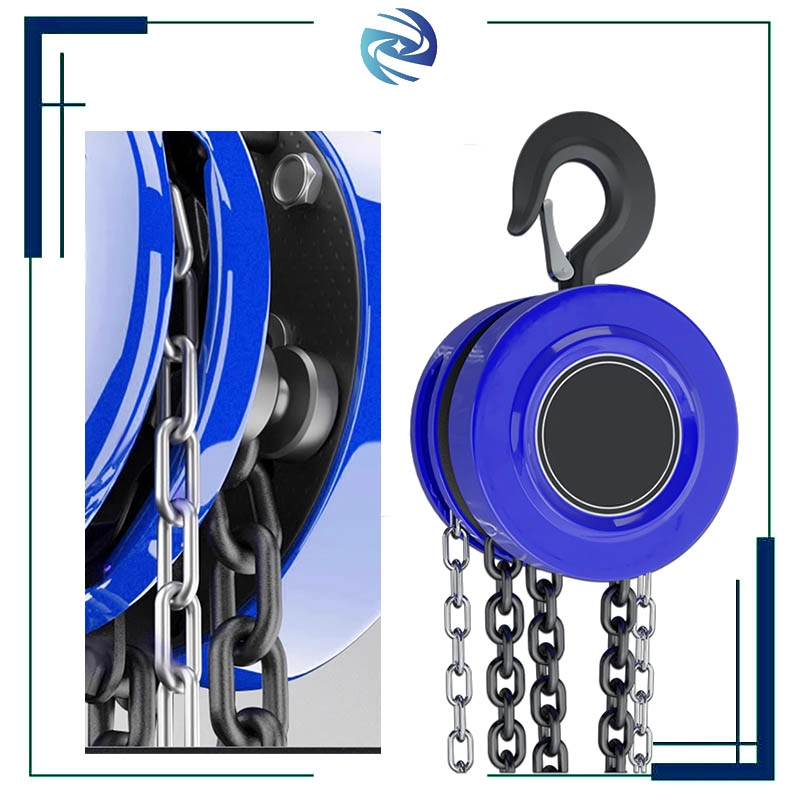
A chain hoist should be selected as part of a lifting system. For this selection-mistake topic, the most relevant product references are the HSZ Round Manual Chain Block for general manual lifting, the HSC Chain Hoist Confined Space Hoist for low-headroom or compact work areas, the HHBB Electric Chain Hoist for repeated powered lifting, and the G80 Alloy Steel Lifting Chain for chain-grade evaluation.
Rated capacity is the first filter, but many buyers treat it as a rough estimate. That is risky. The actual load weight, lifting method, attachment angle, shock loading risk, and future use should all be considered. A hoist should not be pushed to its limit as a daily habit. If the load weight changes often, the buyer should choose capacity with a realistic safety margin and confirm the full lifting path.
Lift height affects chain length, operator effort, hook travel, and storage. Headroom affects whether the hoist can lift the load high enough in the available space. A hoist that works on paper may fail in a low-ceiling workshop. Before purchase, buyers should measure beam height, floor space, load height, and the final required lifting position.
Manual and electric chain hoists are not interchangeable in every application. A manual hoist is practical for maintenance and occasional lifting. An electric hoist is better for repetitive work, faster lifting, and reduced operator fatigue. A common mistake is buying a manual unit for a production task only because the purchase price is lower. The hidden cost appears later in labor time and slower output.
Selection mistake | Possible result | Better approach |
|---|---|---|
Buying by price only | Short service life or frequent repairs | Compare structure, chain, brake, hook, and supplier support |
Ignoring headroom | Load cannot reach the required height | Measure the full lifting path before ordering |
Using manual for high cycles | Slow work and operator fatigue | Consider electric hoist for repeated lifting |
Forgetting environment | Corrosion, wear, or poor operation | Check humidity, dust, temperature, and outdoor exposure |
No inspection plan | Damage is found too late | Set routine checks for chain, hook, brake, and housing |
The load chain is one of the most important parts of the lifting system. Buyers should check material, grade, surface treatment, marking, and wear resistance. Zhong Sheng Lifting’s G80 lifting chain information highlights alloy steel, EN 818-2 and ISO 3076 references, surface treatment options, proof load testing, and a 4:1 safety factor. Details like these matter because the chain carries the load directly.
A dry indoor workshop is different from a wet construction site or outdoor yard. Dust, humidity, rain, chemicals, and temperature changes can affect chain condition, brake performance, and housing durability. If the hoist will work outdoors or in a harsh environment, buyers should ask about coating, chain protection, storage, inspection frequency, and replacement parts.
Even a good hoist can be used badly. Operators should understand rated capacity, hook alignment, load balance, hand chain direction, electric controls, warning signs, and when to stop using the equipment. Training does not need to be complicated, but it must be practical. A simple checklist can prevent many avoidable problems.
The hoist is only one part of the lift. Slings, hooks, shackles, trolleys, and beams must also match the load. A strong hoist attached to a poor rigging point is still unsafe. Buyers should review all contact points in the lifting path and confirm that every component is suitable for the task.
A clear quotation should include more than a model name. Buyers should ask for rated capacity, lift height, chain size, hook information, net weight, packing details, inspection guidance, and available spare parts. For electric hoists, they should also ask for voltage, control method, lifting speed, motor information, limit switch design, and protection features. Missing details often lead to wrong selection.
It is also useful to ask for photos of the hoist, chain, hook, label, and package. These details help purchasing teams confirm that the offered product matches the required working conditions. If the hoist will be used in a regulated or high-risk workplace, the buyer should keep documents for internal safety records. Good documentation does not replace inspection, but it makes the selection process more transparent.
Not automatically. Capacity should match the real load and lifting method. Oversizing can add unnecessary cost and weight, while undersizing creates safety risk.
Operators should perform basic visual checks before use. Formal inspection frequency depends on work intensity, environment, and internal safety rules.
Stop using it and check the chain path, hook condition, brake behavior, lubrication, and signs of deformation or contamination before returning it to service.
Common chain hoist selection mistakes are avoidable. Buyers should define the load, lifting height, work frequency, environment, power availability, inspection routine, and rigging accessories before placing an order. A good selection process may take more time at the beginning, but it reduces later downtime and improves lifting safety. The right chain hoist is not simply the strongest or cheapest option; it is the one that fits the real industrial task.